
Research. Strategy. Insights.
My research spans education, health, access, workforce systems, and organizational improvement. Across those settings, I focus on rigorous evidence that people can understand, explain, and act on.
My research begins with the question—and the people who need the answer.
Mixed methods
I match each question to the right combination of quantitative, qualitative, and implementation evidence. The goal is to connect measurable patterns with the experiences and context behind them.
Equity-centered inquiry
I ask who is represented, whose experience is missing, who benefits, and where systems create uneven opportunity. Equity is part of the research design—not an afterthought.
Accessible communication
I translate technical findings into clear, defensible data stories, practical tools, and meaningful choices for technical and nontechnical audiences.
More Than a Seat at the Table:
A New Path to Diversifying Statistics Education
Who gets welcomed into statistical inquiry—and what helps them thrive once they arrive? My master’s thesis examined access to introductory statistics and the experiences of students in a multidisciplinary, project-based course.
Drawing on enrollment data from 794 students and pre- and post-course surveys, the study found that women and racially underrepresented students were more likely to choose the project-based course than the traditional course. Underrepresented students described the course as challenging, while also reporting that they accomplished more than they expected and that the effort was worthwhile.
Access and belonging
Broadening participation means attending to both curriculum and classroom culture, including the support students need to see themselves as capable researchers.
Questions that matter
Projects built around students’ own questions create a practical entry point into statistical reasoning, analysis, and communicating a story with data.
Learning we can improve
Looking closely at students’ experiences, confidence, and perceived learning helps educators identify where teaching and support can improve.
These themes continue to shape my teaching and JASAG’s Researcher Skills Development: helping people ask meaningful questions, build transferable skills, and take ownership of their data stories.
Current and continuing areas of inquiry
Peer-reviewed and applied work
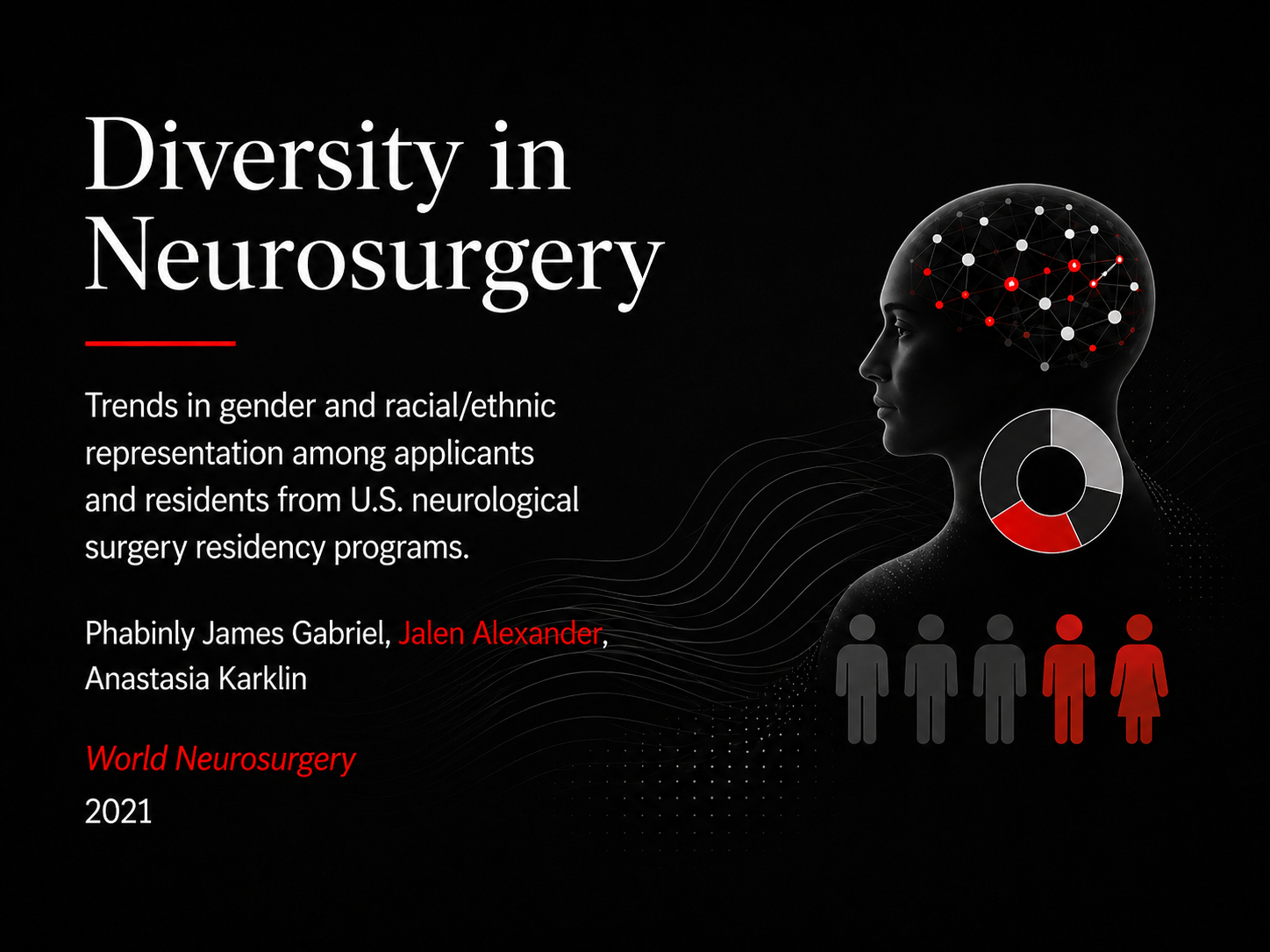
Diversity in Neurosurgery
This study examines trends in gender and racial and ethnic representation among applicants and residents in U.S. neurological surgery programs, highlighting the field’s progress—and its continuing gaps.
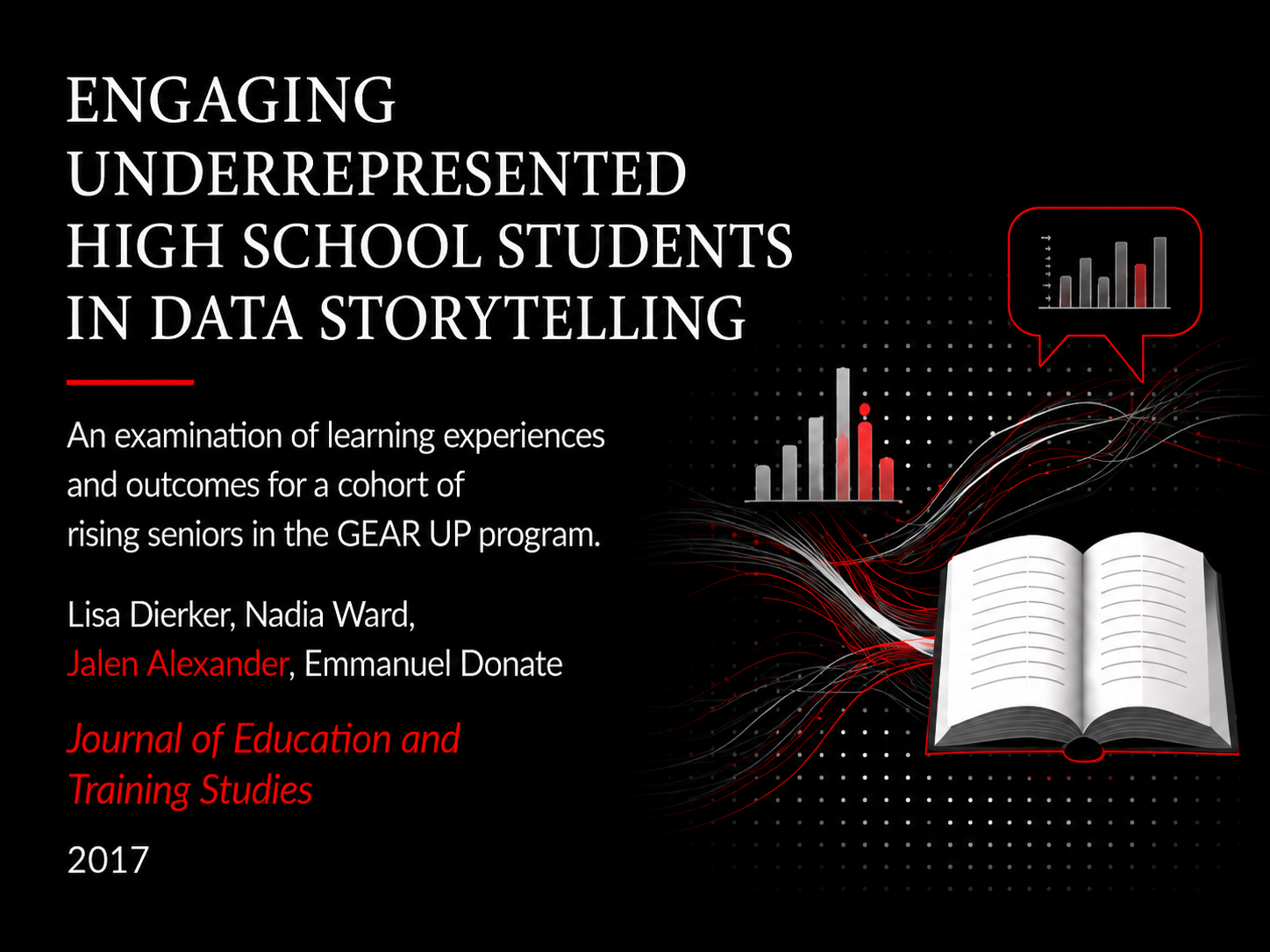
Engaging Underrepresented High School Students in Data-Driven Storytelling
This study explores how rising high school seniors in GEAR UP experienced a data-driven storytelling program, examining both their learning outcomes and their engagement with statistical inquiry.
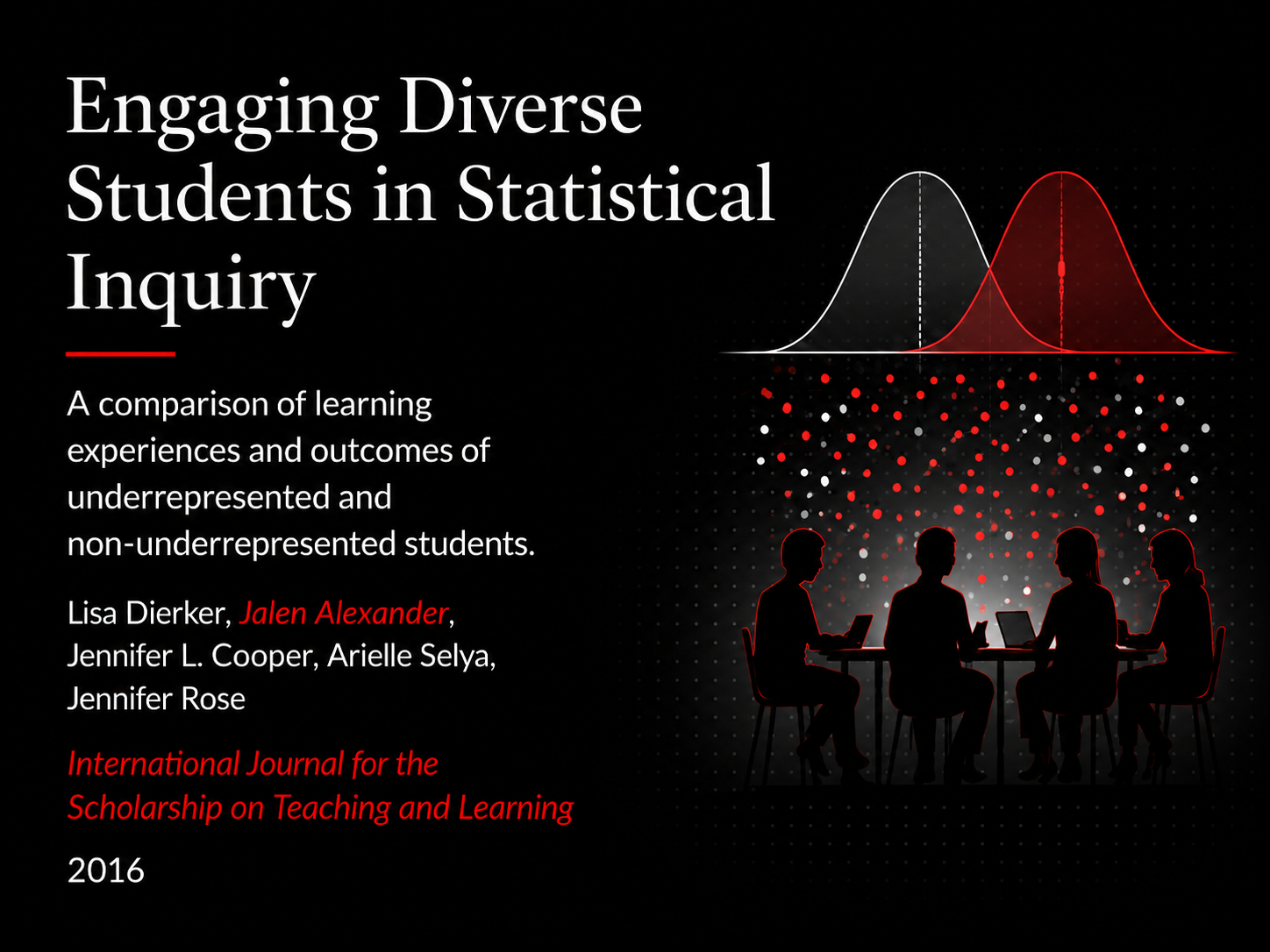
Engaging Diverse Students in Statistical Inquiry
This study compares the experiences and outcomes of underrepresented and non-underrepresented students in a multidisciplinary, project-based statistics course, with attention to who participates and how they learn.
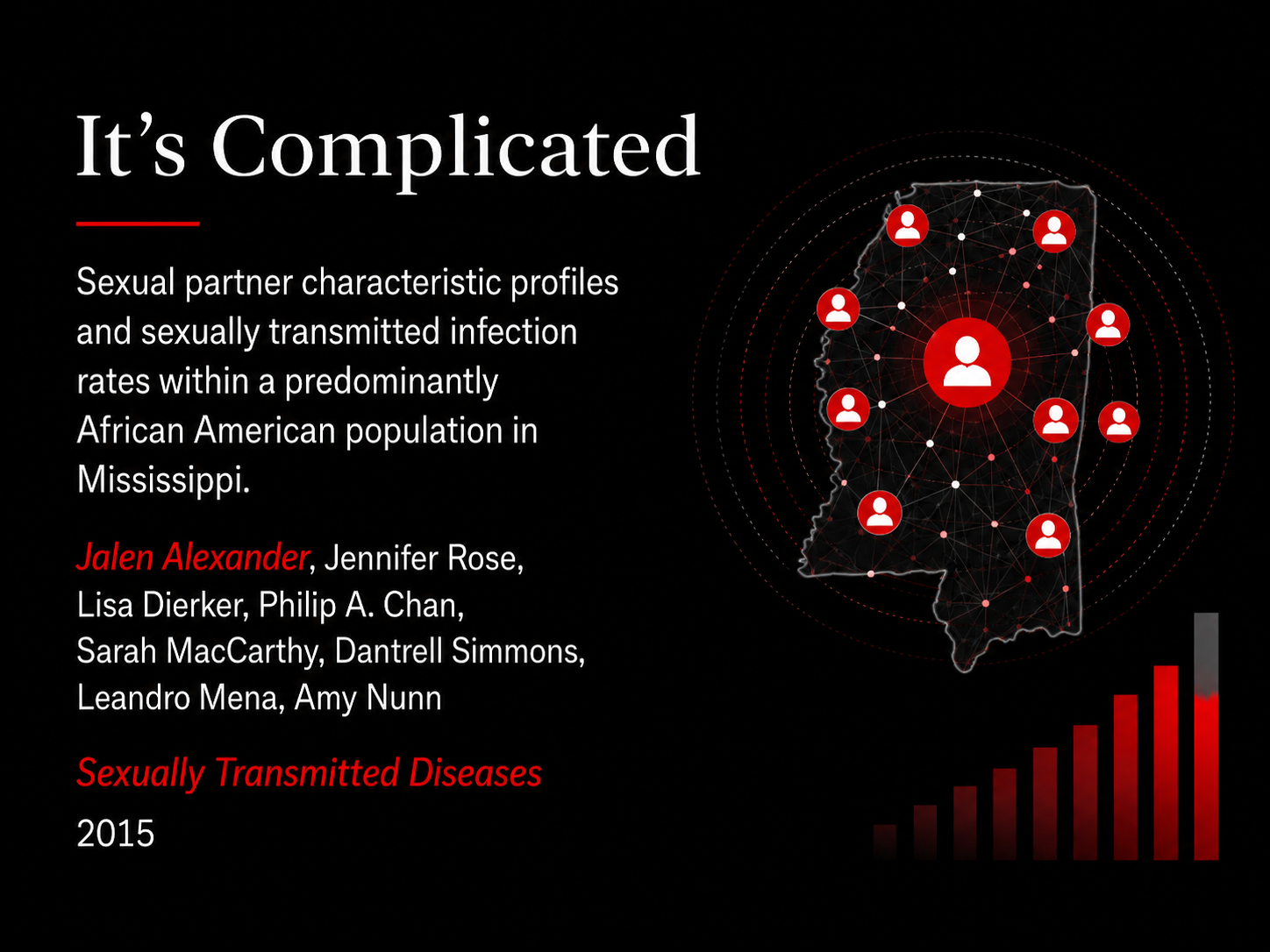
It’s Complicated
This study examines sexual-partner profiles and sexually transmitted infection rates in a predominantly African American population in Mississippi, showing how relationship context can sharpen public-health understanding.
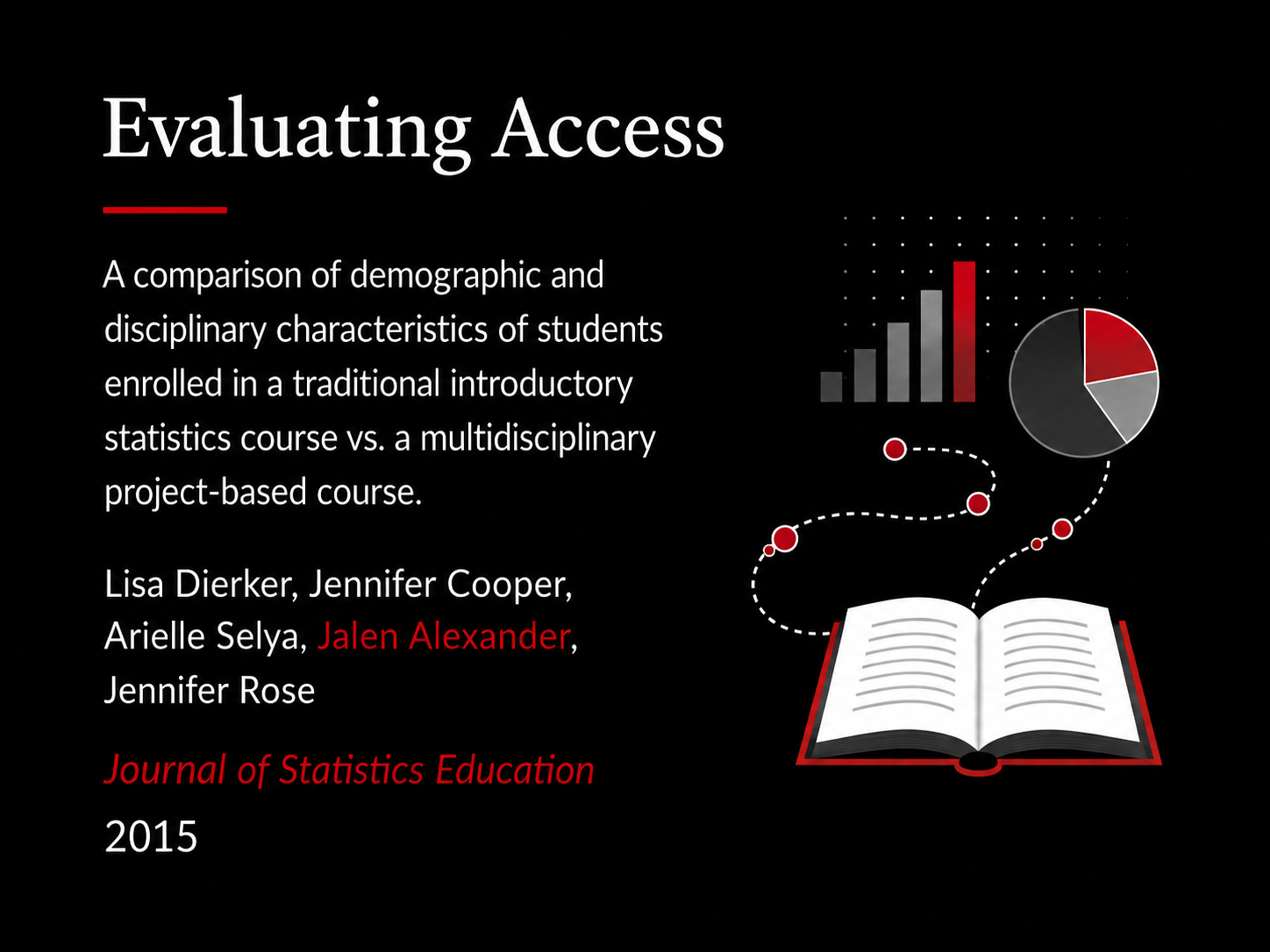
Evaluating Access: Comparing Enrollment Patterns in Traditional Versus Multidisciplinary, Project-Based Introductory Statistics Courses
This study asks whether a multidisciplinary, project-based introductory statistics course can broaden access. It found participation across a wider range of majors and higher selection rates among underrepresented students than the traditional course.
Good research should travel—from analysis, to understanding, to action.
Through JASAG, I support research design, evaluation, analysis, data storytelling, and the development of transferable research skills.